- TESTED two shifts played end to end on the browser build, 2026-11-04
- IN-GAME the eight objective cards, the opening-hours panel, the order terminal and the till
- OFFICIAL ONLY the portal card, quoted for platform and rating only
- NEEDS CHECK when new products unlock, what a longer shift is worth, and whether day count ever resets
Day one, in the order the client asks
The objective card in the corner is the only quest log the game has, and it moves in a fixed order:
- Look around — move the mouse.
- Move —
WASDto the blue disc on the pavement. - Name the shop — walk to the sign and accept the default,
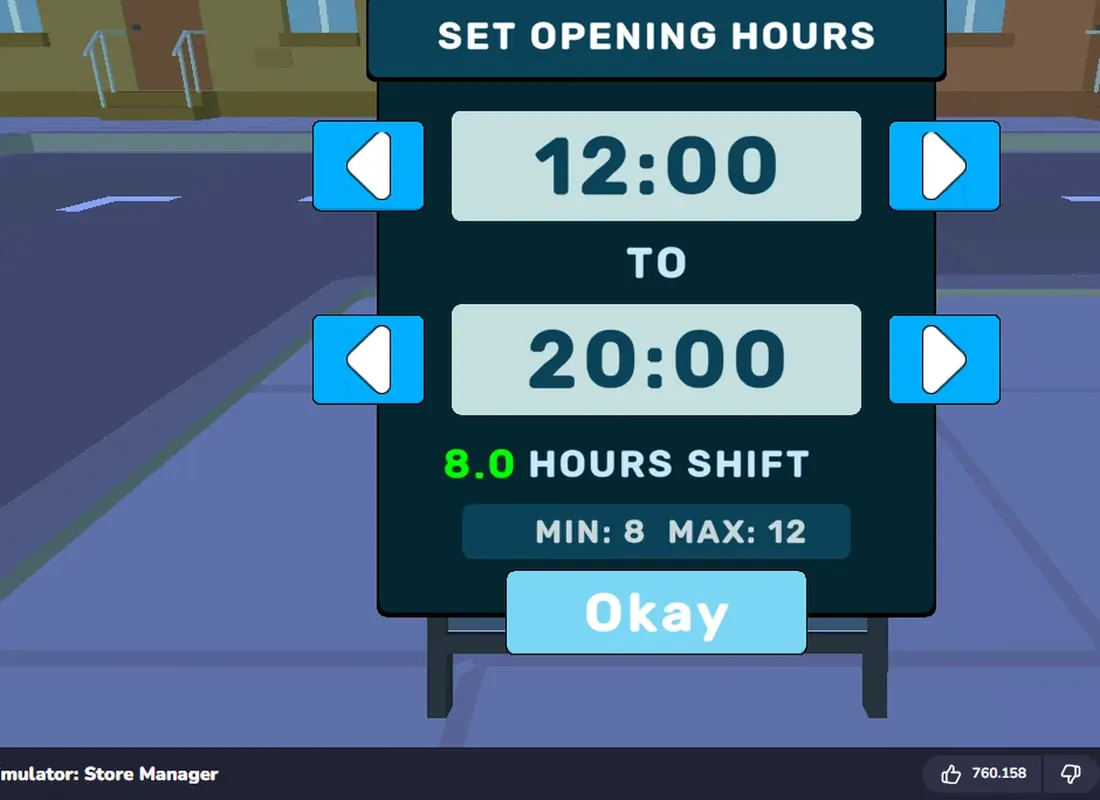
MyMarket. - Set the hours — the A-frame board asks for a start, an end, and prints
MIN: 8 MAX: 12. - Pick up a box — deliveries arrive on the floor; a click lifts one.
- Open it —
Ecuts the tape. - Dispatch — click the shelf and the goods jump across.
- Bin the box — the objective turns red until the empty carton is in the bin outside.
Your cash reads $25.00 and the clock reads 09:00 for all eight.
What the $25 buys
Almost nothing, which is the point. Wholesale prices on the order terminal start
at $0.25 a unit (POTATOES), and a full case is twelve. The cheapest order
you can place is a few dollars; the most expensive thing in the building is the
SELF CHECKOUT at $750.
So week one is not a shopping spree. It is: buy one product, sell it out, buy two.
The order screen is also where the license wall lives — eight cards read
LICENSE NEEDED instead of a price, which means the product list is gated, not
just expensive. What a license costs is something we have not bought, so this
page does not print a number for it.
Where the money actually comes from
One completed sale we watched closely: a customer paid $0.99, the till asked us
to give $0.00 change, and the cash figure went $25.00 → $25.99. The whole
margin of the transaction is the shelf price, because the goods were already
paid for at wholesale.
That is why the till matters more than it looks: it is the only place where a mistake costs you money you already spent.
Four choices the tutorial does not make for you
- Shift length.
MIN: 8 MAX: 12hours. A longer day means more customers before closing, and we have not measured how many more — the panel prints the limits, not the revenue. - What to stock. One product sold out fast enough that we restocked it, but we never saw a shelf sit empty long enough to call it demand.
- Price. The reputation help card lists
Overpricingas a way to lose reputation, which only makes sense if you can set the price. We have not found that screen yet, so treat this as the one lever we know exists and do not know how to pull. - When to stop spending. Level 4 arrived with
$93.48in the till and the level bar barely moved, so levelling is not bought — it is a by-product of trading.
Closing time is not the end of the day
At 20:00 the objective card turns red:
You can't end the day without dealing all the customers inside the shop
Whatever is left in the queue has to be served before the day rolls over. Plan the last fifteen minutes for the queue, not for the shelves.
What we would do differently (opinion, clearly labelled)
Restock before the queue forms, keep one shelf of the cheapest item as a loss leader, and set the shift to the minimum until the store has enough stock that a long day does not just mean more empty shelves. That is judgement, not measurement, and the pages linked below are where the measured parts live.
What we have not confirmed
Whether the day counter resets, what changes between DAY 1 and later days,
when the first new product unlocks, and whether a customer who leaves unserved
costs reputation. All four are visible in the client and none of them were
visible to us yet.
Last checked against the client: 2026-11-04 · client web build 2026-11-04